Introduction
In today’s hyper-competitive retail landscape, every hour counts. Store managers and frontline associates juggle thousands of repetitive tasks each week—from changing price tags and checking inventory to fulfilling online orders and managing checkout lines. Collectively, these tasks drain hundreds of thousands of labor hours that could otherwise be spent serving customers or driving sales. The rise of automation in retail—through technologies like electronic shelf labels (ESLs), RFID tracking, computer vision, and automated fulfillment centers—is flipping that equation. Retailers across the globe are saving 100,000+ hours annually by streamlining store operations, accelerating price changes, improving inventory accuracy, and reducing fulfillment times. More importantly, these time savings are not just about cutting costs—they are about reinvesting human effort where it matters most: delivering better customer experiences, scaling e-commerce, and improving profitability in a low-margin industry.
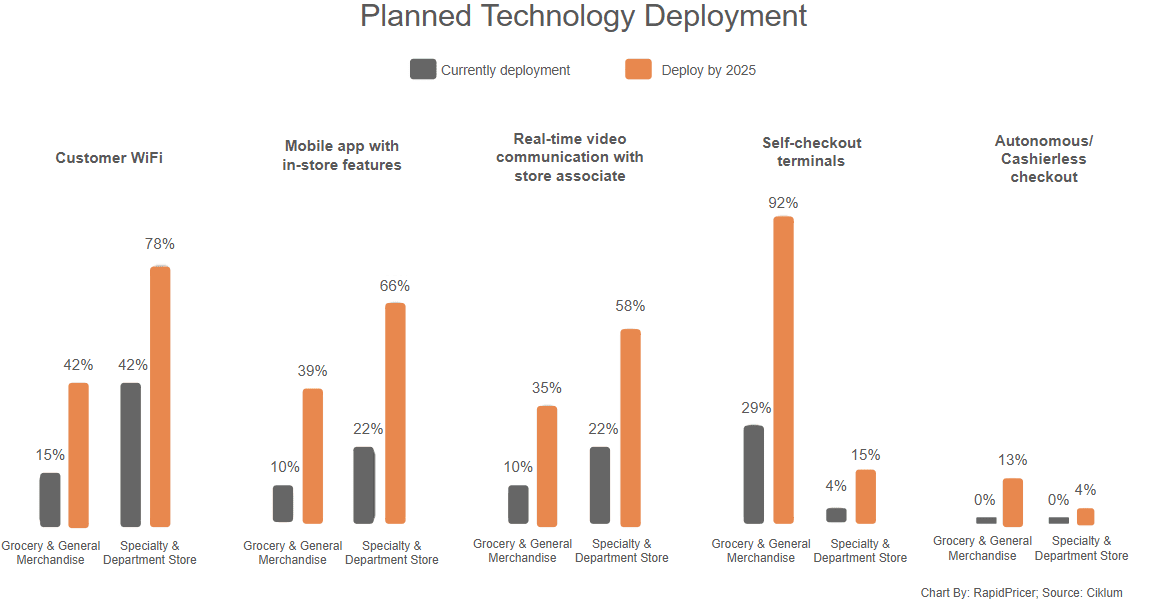
Figure 1: Planned Technology Deployment
Where the hours come from
Price changes & planogram work (Electronic Shelf Labels)
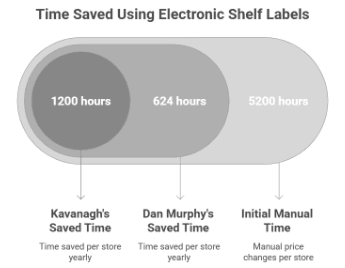
Figure 2: Time Saved Using ESLs
● Baseline: Many grocers change thousands of prices weekly. ESLs update every shelf edge in seconds, eliminating manual printing, walking, and compliance checks.
● Time savings: Vendor and retailer case studies commonly cite 8–12 hours/week per store saved, with higher ranges in promo-heavy formats. For example, Dan Murphy’s (AU) reports ESLs and AI pricing help save ~12 staff hours per store per week—that’s 624 hours per year per store. Across 273 stores, that equals ~170,000 hours/year reclaimed.The Australian
● Upper bound scenario: A white paper notes that 3,000 price changes/week can translate to ~5,200 hours saved per store per year when moving from paper to ESLs (assumption-based, but shows the ceiling in promo-dense operations).extr-p-001.sitecorecontenthub.cloud
● Another real store datapoint: Kavanagh’s Belsize Park reported ~600 hours saved in 6 months from digital shelf technology (≈1,200 hours/year per store).VusionGroup
Why it matters: Price integrity improves, promo execution accelerates, and colleagues shift to selling and service. Academic and industry reviews also link smart shelves/ESLs to better on-shelf availability and post-purchase satisfaction.Wiley Online LibraryPMC
Inventory accuracy & replenishment (RFID + Computer Vision)
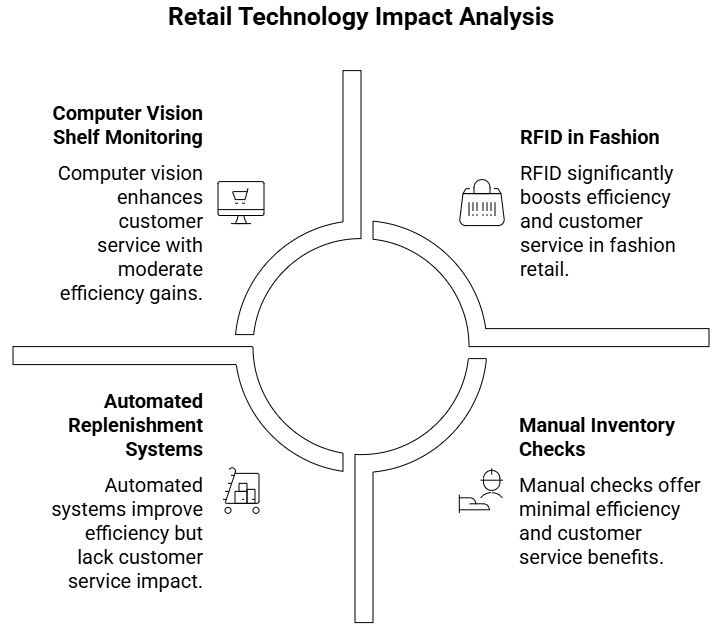
Figure 3: Retail Technology Impact Analysis
● RFID in fashion: Inditex/Zara’s RFID program is one of retail’s largest; studies and practitioner reports tie RFID to faster cycle counts (minutes vs. hours), higher accuracy, and faster replenishment to floor. Some case writeups estimate ~2,000 labor hours saved per store per year from accelerated counts and replenishment improvements. (Figures vary by format and frequency; use them as directional.)EncstoreUSC Center for Effective Organizationsimpinj.com
● Computer vision shelf monitoring: Retailers are deploying CV to flag gaps, mis-placements, and share-of-shelf deviations in near-real-time, cutting manual audits and nighttime walks. Technical studies and vendor cases document significant reductions in out-of-stock detection time and restock latency.ResearchGateLandingAIXenonStack
Why it matters: Every minute not spent hunting SKUs or auditing shelves becomes time serving customers, pushing attachments, or handling click-and-collect waves.
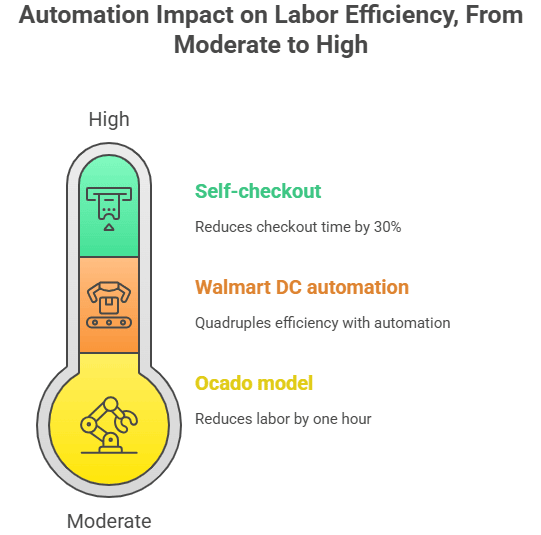
Figure 4: Automation Impact on Labor Efficiency, From Moderate to High
Fulfillment automation (Dark stores, CFCs, micro-fulfillment)
● Ocado model: An Ocado Customer Fulfillment Center (CFC) can complete a 45–50 item order in about 10 minutes of human labor, ~1 hour less than store-based picking. Multiply by thousands of orders and the hours compound fast.Supply Chain Dive
● Walmart DC automation: Walmart reports twice the throughput with half the staff at fully automated distribution centers—a 4× efficiency gain, freeing capacity for growth without proportional headcount increases.Business Insider
Why it matters: As e-commerce penetration stabilizes at a higher base, labor leverage in fulfillment is a decisive margin lever.
Checkout & service automation (self-checkout, assisted checkout, kiosks)
● Cycle-time impact: Industry sources cite up to ~30% faster checkout times when self-checkout is implemented well (hybrid lanes, appropriate baskets). Caveat: shrink management and UX design are critical to realizing net benefit.market-pay.comBlue Book Services
Why it matters: Faster lines shorten perceived wait, drive higher throughput per labor hour, and free associates for service or BOPIS staging.
Case studies you can cite in the board deck
● Dan Murphy’s (AU): AI price monitoring + ESL rollout across 273 stores; cites ~12 hours/week per store saved, plus paper/printing savings and operational efficiency.The Australian
● Walmart (US): Automated DCs deliver 2× throughput with half the staff; expanding automation across the DC network and exploring autonomous forklifts for additional gains.Business InsiderReuters
● Ocado-powered CFCs (US/EU):~10 minutes of human labor per 45–50 item order, roughly ~1 hour saved vs. in-store picking; Kroger continues to add facilities.Supply Chain Dive
● Kavanagh’s Belsize Park (UK):~600 hours saved in 6 months through digital shelf technology (≈1,200/year).VusionGroup
● Zara / Inditex (Global): Large-scale RFID adoption driving faster counts, higher accuracy, and quicker floor replenishment (multiple sources and academic/industry documentation).USC Center for Effective Organizationsimpinj.com
The macro backdrop: why the timing is right
● Retail is leaning in on AI/automation ROI: McKinsey estimates $240–$390B of economic value from gen-AI in retail, and 92% of executives plan to boost AI spend within three years. The time saved is being redeployed to new activities or deeper customer work.McKinsey & Company
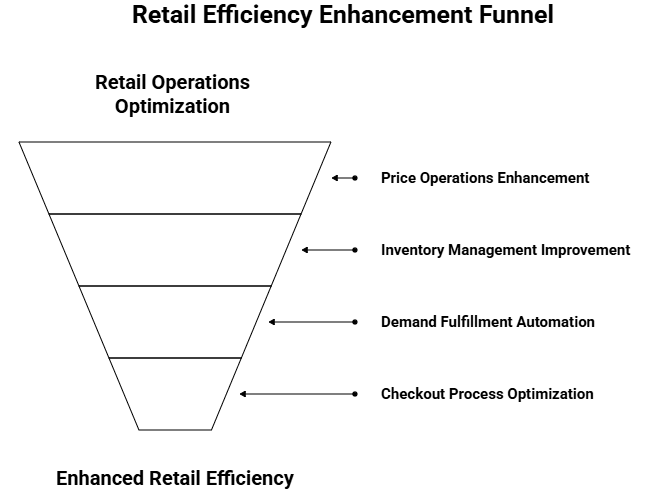
Figure 5: Retail Efficiency Enhancement Funnel
Implementation playbook (fast wins first)
1. Start with price ops
○ Roll out ESLs in high-promo aisles and price-volatile categories first. Measure: manual ticket hours removed, promo compliance rate, price error credits reduced. Benchmarks above.extr-p-001.sitecorecontenthub.cloudVusionGroup
2. Instrument inventory
○ Pilot RFID for high-SKU, high-velocity apparel or GM; add computer vision for shelf gaps in center store. Measure: cycle-count time, on-shelf availability, walk time per replenishment.USC Center for Effective Organizations, ResearchGate
3. Decant online demand into automated nodes
○ Where volume supports it, shift from in-aisle picking to MFC/CFC capacity. Measure: labor minutes per order, pick accuracy, lead-time.Supply Chain Dive
4. Tune checkout, don’t just add kiosks
○ Use hybrid staffing, basket-size rules, and targeted loss-prevention to protect the hour savings and UX. Measure: items/minute, queue time, shrink deltas.market-pay.com, Blue Book Services
What good looks like (KPIs you can publish internally)
● Hours removed from: price changes, audits, cycle counts, replenishment walks, order picking, queue management.
● Throughput per labor hour (front-end, backroom, fulfillment).
● On-shelf availability & price accuracy.
● Shrink at self-checkout vs. assisted checkout.
● Payback period for ESL/RFID/CV/CFC (most wins hit sub-24-month paybacks when scoped well).
Statistics for you
● “~170,000 hours/year saved from ESL/AI across a 273-store chain.” (Dan Murphy’s)The Australian
● “4× efficiency in fully automated DCs (2× throughput with half the staff).” (Walmart)Business Insider
● “~10 minutes of human labor per 45–50 item order vs. ~70 minutes in-store.” (Ocado/Kroger context)Supply Chain Dive
● “Up to ~5,200 hours per store per year saved on price changes in heavy-promo stores when moving from paper to ESLs (assumption-based scenario).”extr-p-001.sitecorecontenthub.cloud
Conclusion
Automation isn’t about replacing people; it’s about giving time back to the floor. Start with ESLs (fastest, most visible ROI), layer in RFID/CV for availability, and route digital demand through automated nodes. If you’re not already capturing 100,000+ hours/year across your estate, the gap is likely process—not potential.