Introduction
For years, pricing software was sold as the ultimate solution to one of retail’s toughest challenges: how to price thousands of products efficiently while protecting margins and staying competitive.
And for a time, it worked—at least in stable, developed markets.
But Latin America is not a stable market. It is fast-moving, fragmented, price-sensitive, and increasingly digital. What worked in North America or Europe is now colliding with a very different reality.
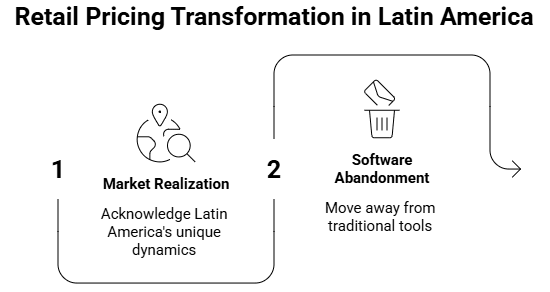
Figure 1: Retail Pricing Transformation in Latin America
Today, a growing number of retailers across Latin America are quietly making a bold move: they are abandoning traditional pricing software.
Not because pricing is less important—but because it has become too important to rely on tools that are slow, rigid, and disconnected from local market dynamics.
The Old Model: Expensive, Slow, and Underutilized
Traditional pricing platforms—offered by global vendors like Pricefx, PROS, and Revionics—follow a predictable model:
● High licensing costs
● Long implementation cycles (often 9–12 months)
● Complex integrations with ERP and POS systems
● Feature-heavy platforms designed for global scale
While these systems promise advanced optimization, the reality inside most organizations is different:
● Teams use only a fraction of available features
● Pricing decisions still rely on spreadsheets and manual overrides
● Insights are generated—but not always executed
The gap between capability and usability is where value is lost.
Why This Model Is Failing in Latin America
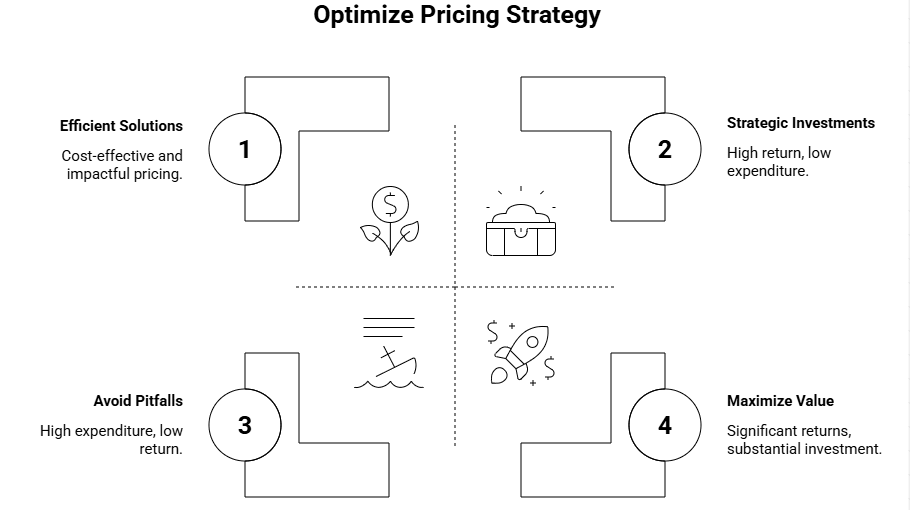
Figure 2: Optimize Pricing Strategy
1. Building Is Cheaper Than Buying
Latin America has a strong and growing pool of affordable technical talent. Retailers are leveraging this advantage by:
● Building internal pricing tools
● Creating agile data teams
● Customizing solutions to their exact needs
In many cases, the cost of building and maintaining in-house systems is lower than licensing enterprise software.
2. The Market Moves Too Fast
Retail in Latin America operates under constant pressure:
● Inflation volatility
● Currency fluctuations
● Rapid competitive shifts
● Highly price-sensitive consumers
At the same time, e-commerce growth is accelerating price transparency and competition across channels.
Traditional pricing tools, built around weekly or monthly cycles, cannot keep up with: The need for continuous, real-time pricing decisions.
3. One-Size-Fits-All Doesn’t Work
Global pricing software is designed for standardized markets. Latin America is anything but standardized.
Challenges include:
● Regional assortment differences
● Informal competition
● Diverse consumer behavior across income segments
● Country-specific regulatory environments
As a result:
● Models fail to capture local nuances
● Recommendations lack accuracy
● Internal teams lose trust in the system
4. Implementation Costs Outweigh Benefits
The hidden cost of traditional pricing software is not the license—it’s everything around it:
● Data preparation
● Integration with legacy systems
● Organizational change management
● Training and adoption
In many cases, Implementation costs exceed the software cost itself, while ROI remains uncertain.
What’s Replacing Traditional Pricing Software
A new approach is emerging—one that reflects how retail actually operates in Latin America.
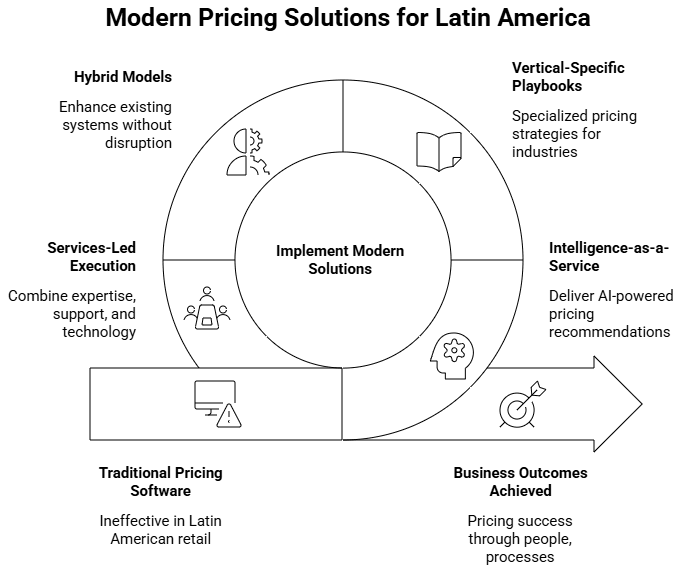
Figure 3: Modern Pricing Solutions for Latin America
1. Intelligence-as-a-Service
Instead of selling tools, modern solutions deliver:
● AI-powered pricing recommendations
● Continuous insights
● Human expertise layered on top
This shifts the focus from software ownership to business outcomes.
2. Vertical-Specific Playbooks
Pricing strategies are becoming more specialized:
● Hard discount: price perception and competitive positioning
● Pharmacy: substitution logic and regulatory constraints
● E-commerce: real-time repricing and demand signals
Specialization is replacing generic optimization.
3. Hybrid Models (Layer, Don’t Replace)
Rather than replacing existing systems, new solutions:
● Sit on top of current infrastructure
● Integrate with ERP and POS
● Enhance decision-making without disruption
This significantly reduces time, cost, and risk.
4. Services-Led Execution
Technology alone is not enough.
Retailers are increasingly adopting models that combine:
● Strategic pricing expertise
● Execution support
● Technology enablement
Pricing success depends as much on people and processes as it does on algorithms.
Case Examples
● Brazilian grocery retailer: Shifted to a hybrid model, reducing pricing cycles from weekly to daily and improving margins by ~2–3%
● Mexican pharmacy chain: Adopted vertical-specific pricing logic, increasing conversion while maintaining margins
● Argentinian e-commerce player: Implemented real-time pricing, improving competitiveness and responsiveness
These examples highlight a broader shift—from static systems to dynamic capabilities.
The Strategic Shift: Pricing as a Competitive Advantage
Pricing is no longer just an operational function.
It is becoming:
● A growth lever
● A competitive differentiator
● A real-time decision engine
Retailers that excel in pricing can:
● Win market share
● Protect margins
● Respond instantly to competitors
RapidPricer’s Approach
The next generation of pricing solutions—like RapidPricer—reflects this evolution:
● Expertise + AI: Combining human insight with machine intelligence
● Integration-first: Working with existing systems, not replacing them
● Execution-focused: Delivering actionable recommendations, not just analytics
This represents a shift from software to pricing intelligence.
Conclusion
Traditional pricing software isn’t disappearing because it failed technologically—it’s disappearing because it no longer fits the reality of Latin American retail.
In a region defined by speed, complexity, and constant change, pricing requires more than tools. It requires intelligence, adaptability, and execution.
The future of pricing in Latin America will not be built on software alone— but on the ability to turn insight into action, faster than the market moves.
*"*AI-Generated Content Disclaimer
*This content was generated in part with the assistance of artificial intelligence tools. While efforts have been made to review, edit, and ensure the accuracy, completeness, and reliability of the content, it may still contain errors or omissions. It should not be considered professional advice, and users should independently verify any information before making decisions based on it. The publisher/author assumes no responsibility or liability for any consequences resulting from reliance on this content."*
Read More On
● Pharmacy Retail Pricing in 2026: Navigating Regulation, Private Label, and E-commerce Disruption
● The E-commerce Pricing Arms Race: Why Mexican Retailers Need Real-Time Intelligence, Not Just Software
● Hyperlocal Pricing for 20,000 Micro-Locations: How Large Convenience Retailers Can Unlock Revenue Growth
● The Grocery Pricing Trilemma in Latin America: Fresh Products, Inflation, and Competitive Pressure
● Private Label vs. National Brands: The Pricing Tightrope in Hard Discount & Pharmacy Retail
● The Hard Discount Pricing Paradox: Pricing 500+ New Stores
About RapidPricer
RapidPricer helps automate pricing and promotions for retailers. The company has capabilities in retail pricing, artificial intelligence, and deep learning to compute merchandising actions for real-time execution in a retail environment.
Contact info:
Website:
LinkedIn:
Email: info@rapidpricer.nl